©

Woman 2101262 1280

|

Pixabay - erikamarcialm

Via ferrata in the Alps

 Discover our must-see vertical spots

Via ferrata in the Alps: discover our must-visit climbing spots

Ajouter aux favoris

Fancy getting up high without travelling to the other side of the world? Between Annecy and Geneva, the Monts du Genevois offer you an accessible and spectacular vertical playground. Here, the via ferrata takes you through limestone cliffs, with views over the Geneva basin, fortified heritage sites and thrills galore.

In France, when people think of via ferrata in the Alps, they often mention the PACA region, the Écrins massif, Briançon, Les Vigneaux, Vallouise, the Oisans and Durance valleys, Serre Chevalier or Puy Saint Vincent. Yet the Geneva region is every bit as good as the southern Alps: here too, the terrain, the rock and the views offer a truly intense alpine experience.

The Alps are brimming with legendary routes, impressive rock faces and landscapes that make you want to look up. But to experience a via ferrata in the Alps, there’s no need to head off into the high mountains or plan a complicated expedition. On the outskirts of Geneva, near Annecy, the ‘ Monts du Genevois ’ offer a simple, straightforward and varied alternative.

Here, you can experience the verticality of the landscape on a human scale. In the space of a few moments, you go from the city to the cliff face, from everyday life to the void, and from hiking to climbing. The area serves as the perfect crossroads between nature, thrills and accessibility. People come here for the adrenaline, the panoramic views and the thrill of pushing their limits. And often, they leave with that rare sense of having truly soared to new heights.

Whether you’re a climbing enthusiast, a curious beginner looking for your first experience, or a group seeking an active outing, the via ferrata in the Geneva side of the Alps offers several ways to tackle the heights. Whether it’s a challenging route facing the Salève, an unusual experience above the Rhône or a session led by a professional, it can be tailored to suit both your preferences and your ability.

The Jacques Revaclier Via Ferrata (Présilly) The vertical challenge on the Salève

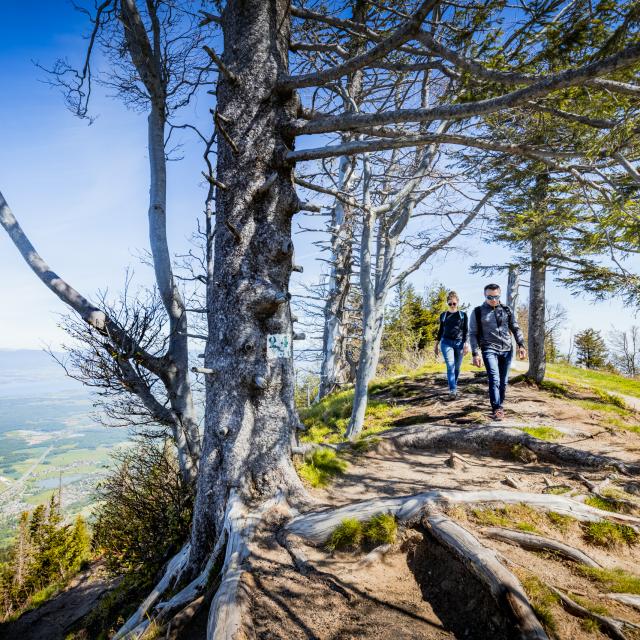
In Présilly, the Jacques Revaclier Via Ferrata sets the tone right from the start. The route begins at the foot of the Salève, in the Bois de Pomier area, near the Chartreuse de Pomier. The setting is simple, natural and almost unassuming at first. Then the limestone cliff takes over, and the experience becomes truly vertical. The route begins with a hiking approach across secure terrain before giving way to a more exposed atmosphere, with a faster pace and a more challenging final section. With a D rating, this level of difficulty places it amongst the sector’s most demanding routes. It requires a good level of ability, confidence on the rock and a real head for heights. The elevation gain becomes increasingly noticeable along the approach path, which already gets your legs working before you tackle the cable-assisted section.

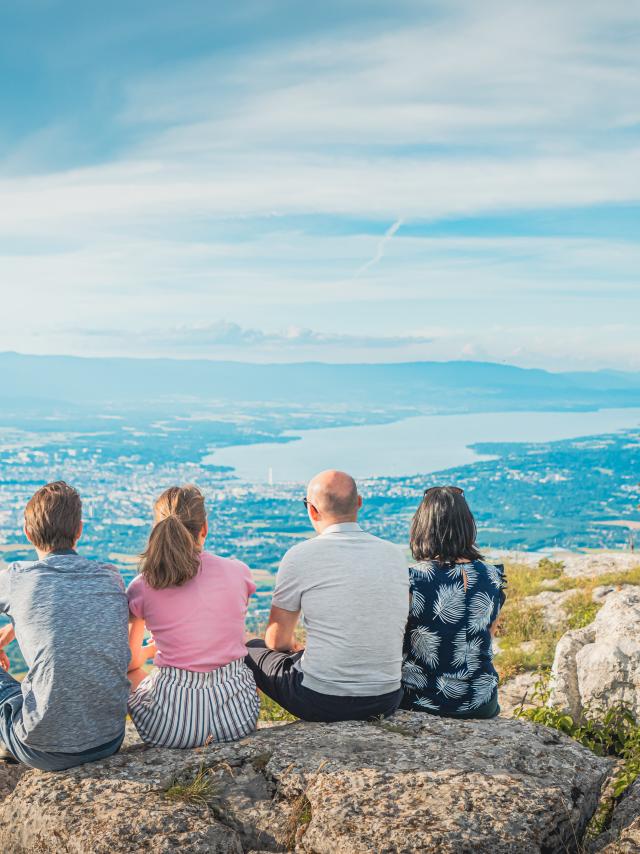
This route is therefore aimed at those who enjoy the sensation of height, can handle exposed sections and can progress with concentration. The route offers a beautiful panoramic view of the Geneva basin. The higher you climb, the more the horizon opens up. The Salève looms large, whilst your gaze sweeps towards Geneva and the surrounding hills. Along this route, stretching several hundred metres, the limestone rock lends character to the climb. Each section invites you to read the rock, place your feet carefully and maintain the right rhythm all the way to the summit. That is the appeal of this via ferrata in the Alps of Haute-Savoie: it combines physical exertion, a sense of closeness to nature and a real sensation of height. From the cliff face, the valley unfolds in stages, giving the impression of gaining altitude without ever leaving the Geneva region.

The finish is one of the highlights of the route. A short overhang, a challenging atmosphere, and your arms really put to the test: you need to save your energy to finish cleanly. The length is reasonable, but the difficulty is concentrated in the final few metres, where your physical fitness really counts. The approach walk and the return path are also part of the experience. From the car park, you reach the start on foot by following the yellow markers, then return via the red markers towards the Sentier des Convers. To the left of certain sections, the vertiginous view serves as a reminder that you’re navigating truly vertical terrain – a far cry from a simple hike. The return route allows you to wind down, whilst prolonging the enjoyment of a well-rounded outing combining walking, climbing and reading the terrain.

This via ferrata is ideal if you’re looking for a challenging, rugged and rewarding outing. It quickly gives you the feeling of being somewhere else, without straying too far from the main routes of the Genevois region. Make sure you have the right kit, stable weather and a suitable level of fitness, especially if you’re new to the sport. For regular climbers, it’s a great route for getting back into the swing of things or honing your skills, with enough intensity, vertical ascent and rock sections to enjoy yourself without venturing into the high mountains. Among the outdoor activities in the area, it offers a short, challenging and very straightforward route for those who enjoy direct, uncompromising routes.
The Fort l'Écluse Via Ferrata (Léaz) A historic adventure high above the Rhône

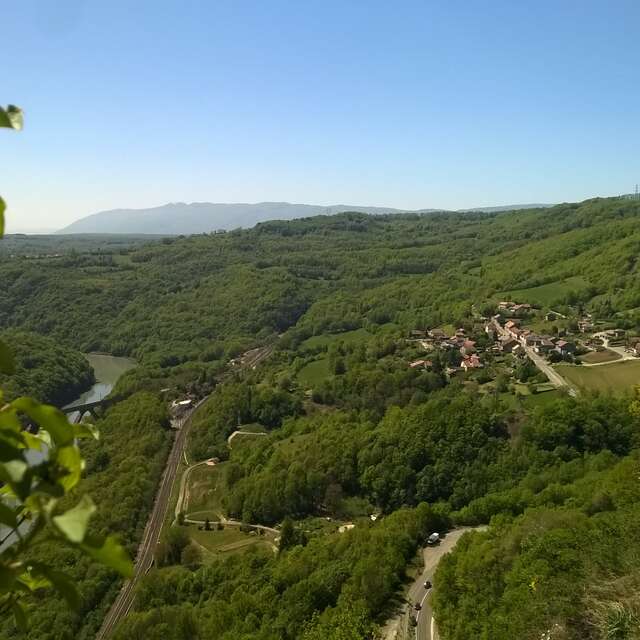
A change of scene in Léaz, with the Fort l’Écluse Via Ferrata. Here, the experience isn’t just about the rock face. It’s also set against a unique heritage backdrop, right next to a military fort clinging to the mountainside. The route climbs the fort’s steep limestone face and offers a splendid view of the Rhône and the Écluse Gorge. Amidst ramparts, rock and gorges, the climb takes on a distinctly alpine feel, with the terrain proving more technical than it first appears. The elevation gain is modest, but the vertical atmosphere heightens the sense of commitment from the very first few metres.

There’s something theatrical about this spot. Beneath your feet, the Rhône flows far below. Ahead of you, the ramparts tell a different story. All around, the rock imposes its rugged relief. The via ferrata then becomes more than just a climbing activity: it’s a way of traversing a place steeped in history, using your hands, feet and senses. The rock, which is sometimes steep, demands precise footwork. The level of difficulty remains manageable for experienced climbers, but the height and atmosphere of the gorges significantly heighten the sense of commitment. The route follows a spectacular path high above the valley, with viewpoints that alternate between the fort, the Rhône and the surrounding cliffs.

The route crosses a series of more or less steep outcrops, with ledges and terraces where you can catch your breath. The final stretch offers a real thrill with a 15-metre rope bridge to cross the gully. This suspension bridge is one of the most memorable moments of the route: it’s only a few metres long, but there’s a real sense of vertigo beneath your feet. This aerial walkway acts as a final test of your nerve, especially when you look down into the gorges. This via ferrata is rated as fairly difficult (AD) and is not recommended for beginners, particularly without a guide. Its rating accurately reflects the balance between accessibility, moderate length and exposed sections.

It is therefore a route that is accessible in spirit, but not to be taken lightly. It will particularly appeal to those who want to combine physical challenge, heritage and a thrill of vertigo. Access is free and the route can be tackled independently with the right equipment. For first-timers, a guide is strongly recommended, especially if you’re afraid of heights or have never used a lanyard before. For regulars, Fort l’Écluse offers a unique route: a short, spectacular itinerary featuring a bridge, rock, metres of drop and a finish that almost feels like reaching the summit of the fort. It is one of the most unique activities in the area, combining heritage, cable-assisted climbing, a footbridge and the atmosphere of a steep-sided valley.

Support and safety Take the plunge with a mountain guide

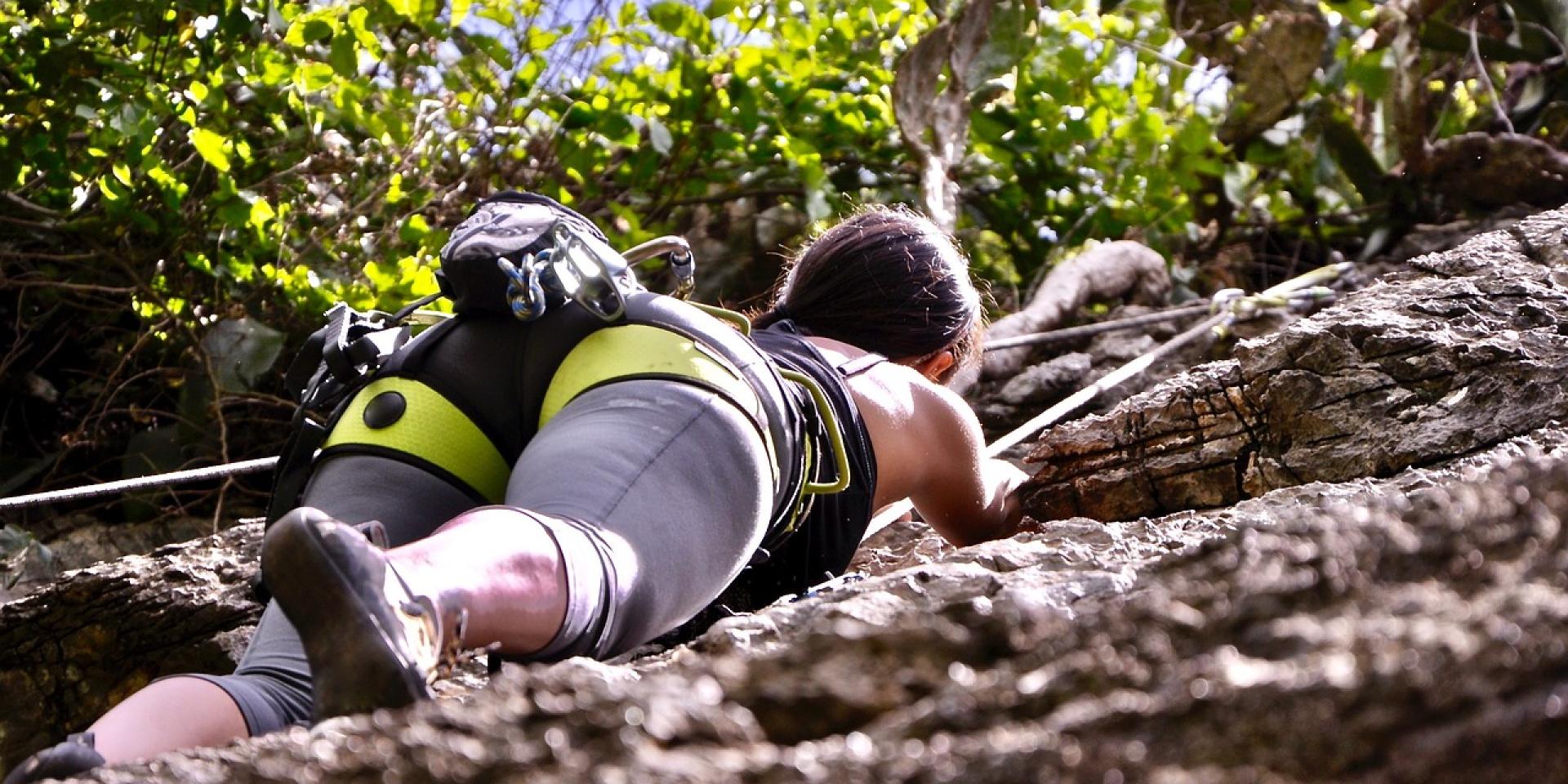
A via ferrata can sometimes feel like a hike. You walk, you make your way along, you follow a route. But as soon as the rock face becomes steeper, the dynamics change. The verticality demands a different kind of focus. You need to know how to secure yourself with a lanyard, maintain three points of contact, cope with the height, anticipate physically demanding sections and stay clear-headed, even when the adrenaline is pumping.

Technical equipment is compulsory. You must wear a mountaineering helmet, a climbing harness and double lanyards with safety carabiners, fitted with a shock absorber. This equipment is essential for tackling a via ferrata. This equipment enables you to progress along the safety line and minimises the risks in the event of a fall.

For your first via ferrata in the Alps, having a professional guide makes all the difference. A guide helps you understand the equipment, read the route, manage your footing and tackle the most exposed sections with greater confidence. The “Via Ferrata with a guide – A mix of climbing and hiking” package offers precisely this: a guided experience, with equipment provided, on steep routes fitted with cables and ladders.

It’s a great option for a family outing, a day out with friends or a team-building activity that breaks the mould. Everyone progresses at their own pace, whilst sharing a memorable experience. The guide ensures safety, but also brings the joy of discovering the Salève, Fort l’Écluse and these landscapes in a different way – landscapes that make you want to look further afield.

Always check the weather forecast before setting off. The weather can change quickly, and you should avoid the route in the event of a thunderstorm. Also make sure you have suitable footwear, water, comfortable clothing and plenty of time allowed for the approach, the route itself and the return journey. The via ferrata is an accessible adventure, provided you respect the terrain.

In the Monts du Genevois, it takes on a simple yet intense form. You don’t need to travel far to feel the open space, touch the rock and experience a genuine moment in the mountains. Between Présilly and Léaz, between Salève and the Rhône, your next via ferrata in the Alps might well begin much closer than you imagine.