



Description
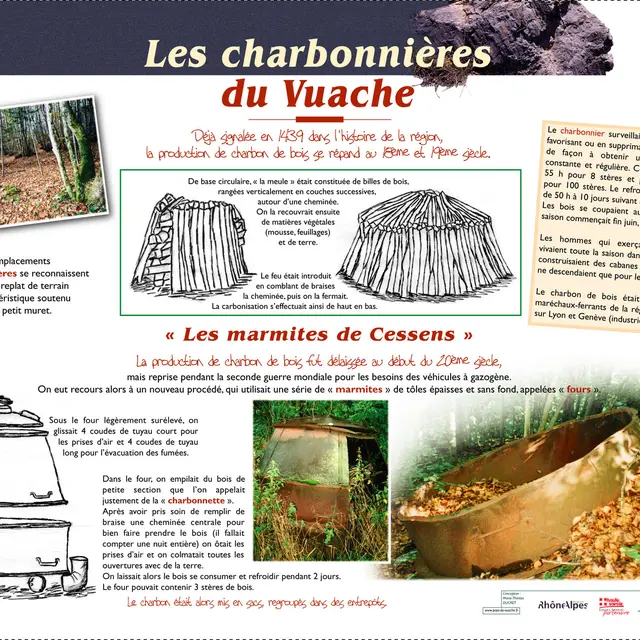
Already mentioned in the region's history in 1439, charcoal production spread in the 18th and 19th centuries. At the time of the Second World War, a new process used thick, bottomless sheet metal kettles called furnaces.
We have a pretty good idea of how these famous furnaces worked. The ovens were made of thick sheet metal, about 2 m in diameter, and consisted of three interlocking parts: a bottomless part in the shape of a large crown that flared out towards the top, a middle part in the shape of a crown that tapered towards the top, and a large lid with a central pipe serving as a chimney. This large, bottomless kettle was slightly raised to accommodate four short air intake pipes and four longer, curved pipes running up the side of the kiln to evacuate the fumes.
Openings
All year 2026 - Open everyday
Location
Plan interactif : 1 lieux répertoriés.
- Lieu sans nom
Spoken languages
Spoken languages