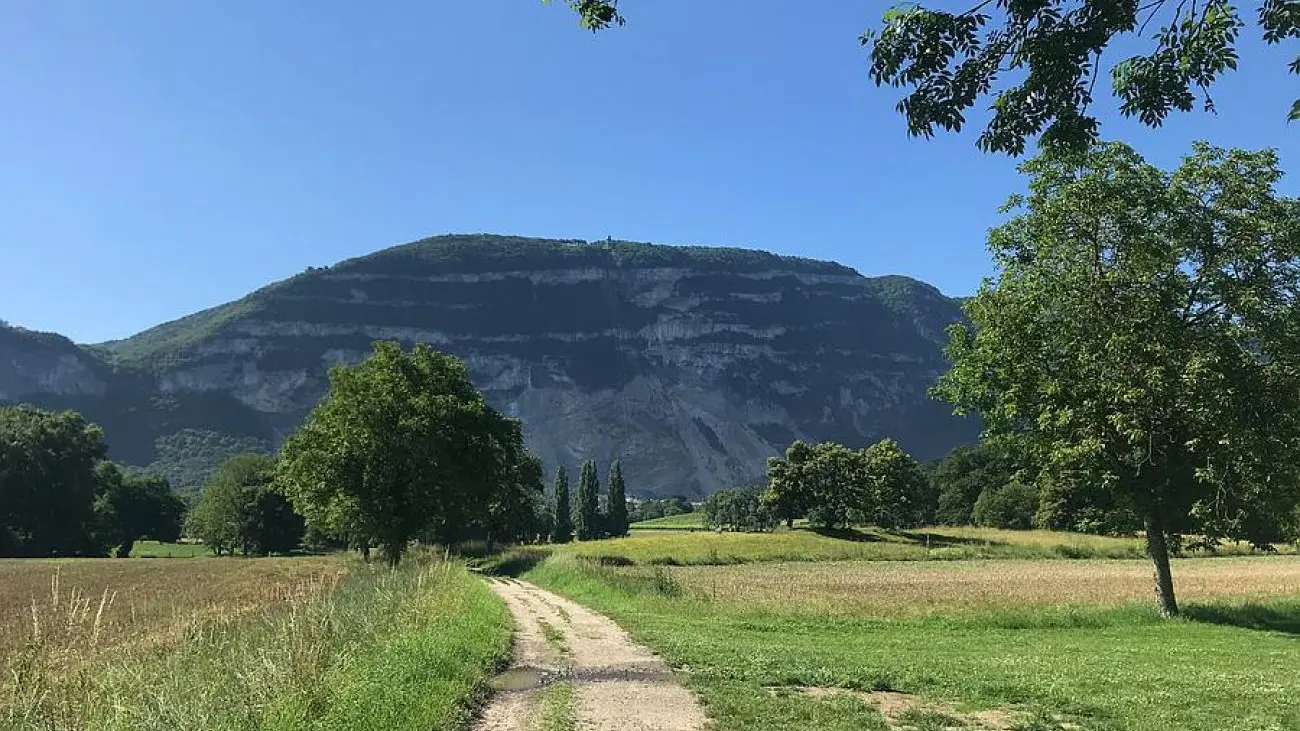
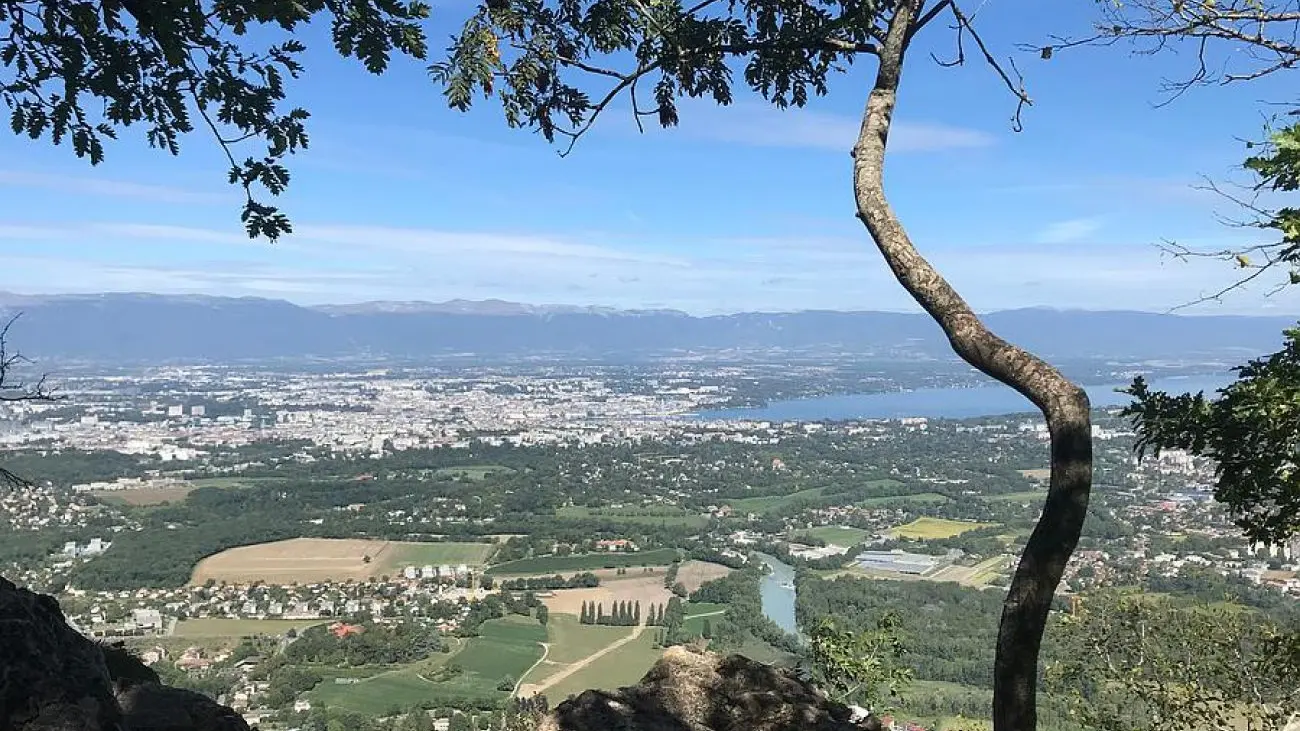
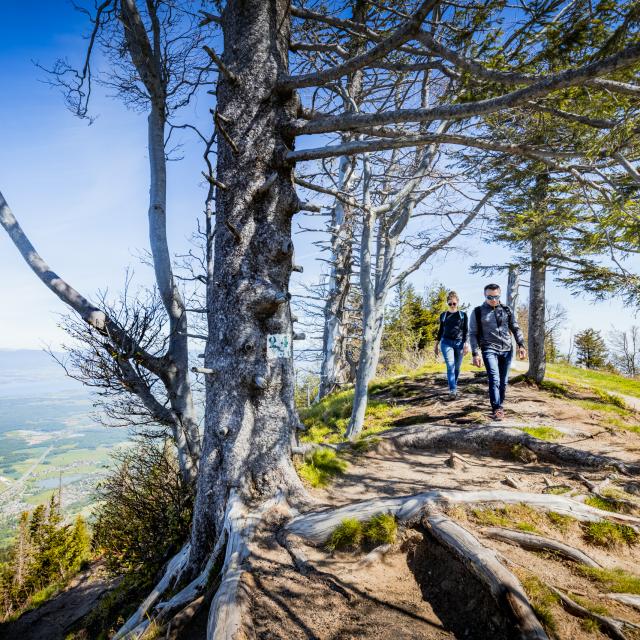
A magnificent hike on the Salève, located in France just a stone's throw from the town center, which not only offers one of the most beautiful views of the Geneva basin, but also has many surprises in store, both historically and naturally.
On the way up, the hike begins near the Arve, the river whose source is in the Mont Blanc Massif. A short distance away, the route passes the hamlet of Sierne. The latter is well worth a detour, with its collection of farm buildings and 17th-century bourgeois mansions offering a journey back in time. After a short incursion into France along a path offering magnificent views of the Salève, we arrive in Veyrier, a charming border village. A final border crossing later, we arrive in the forest at the foot of the Salève. Now it's time to climb the "Genevois mountain", even though it's entirely in France.
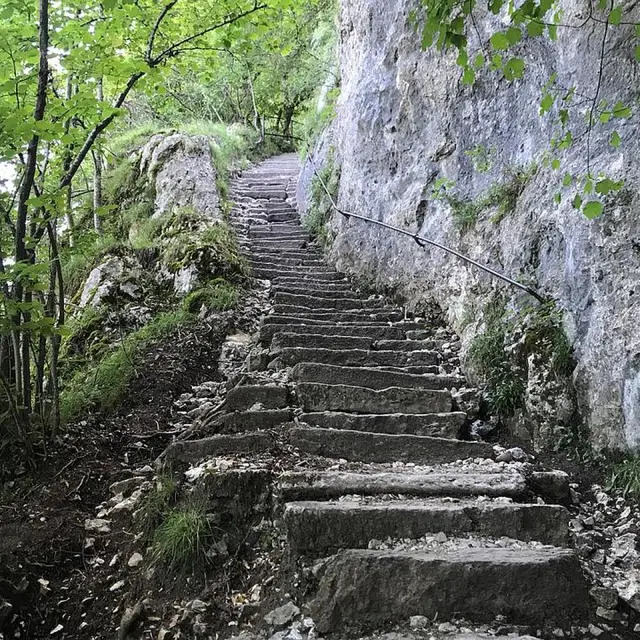
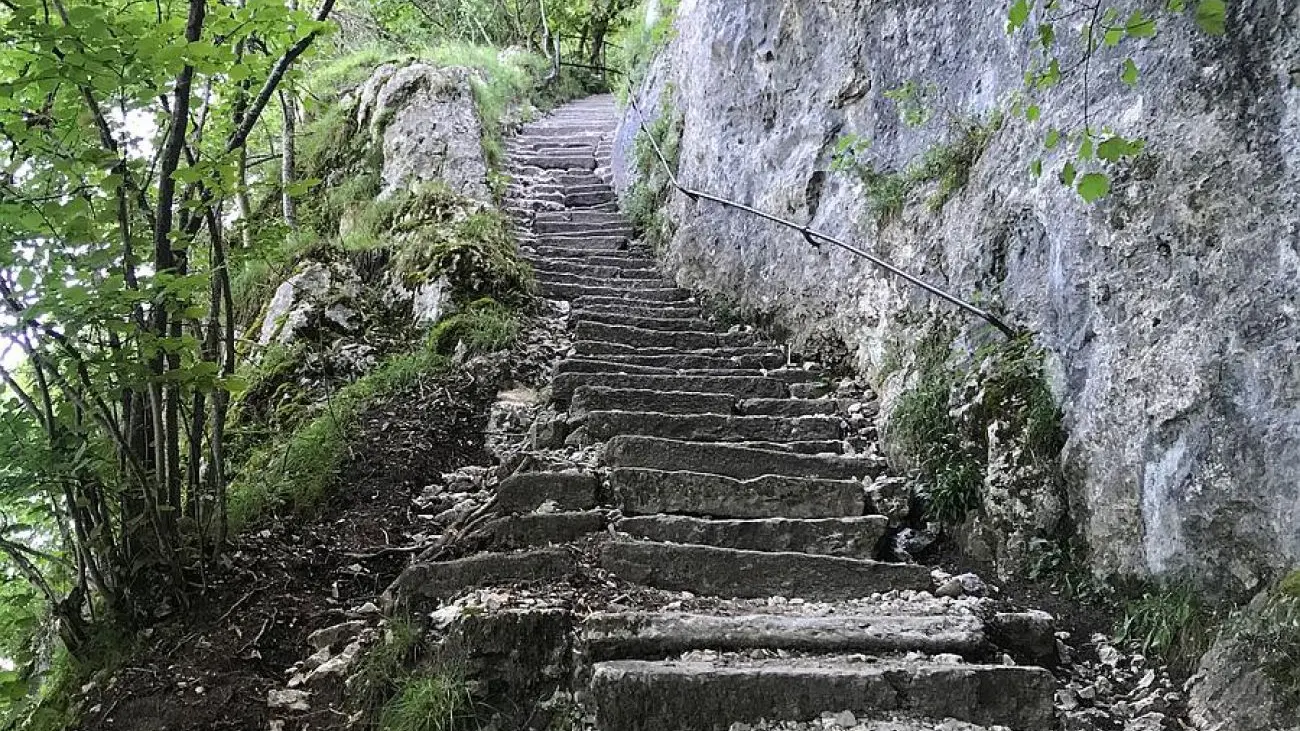
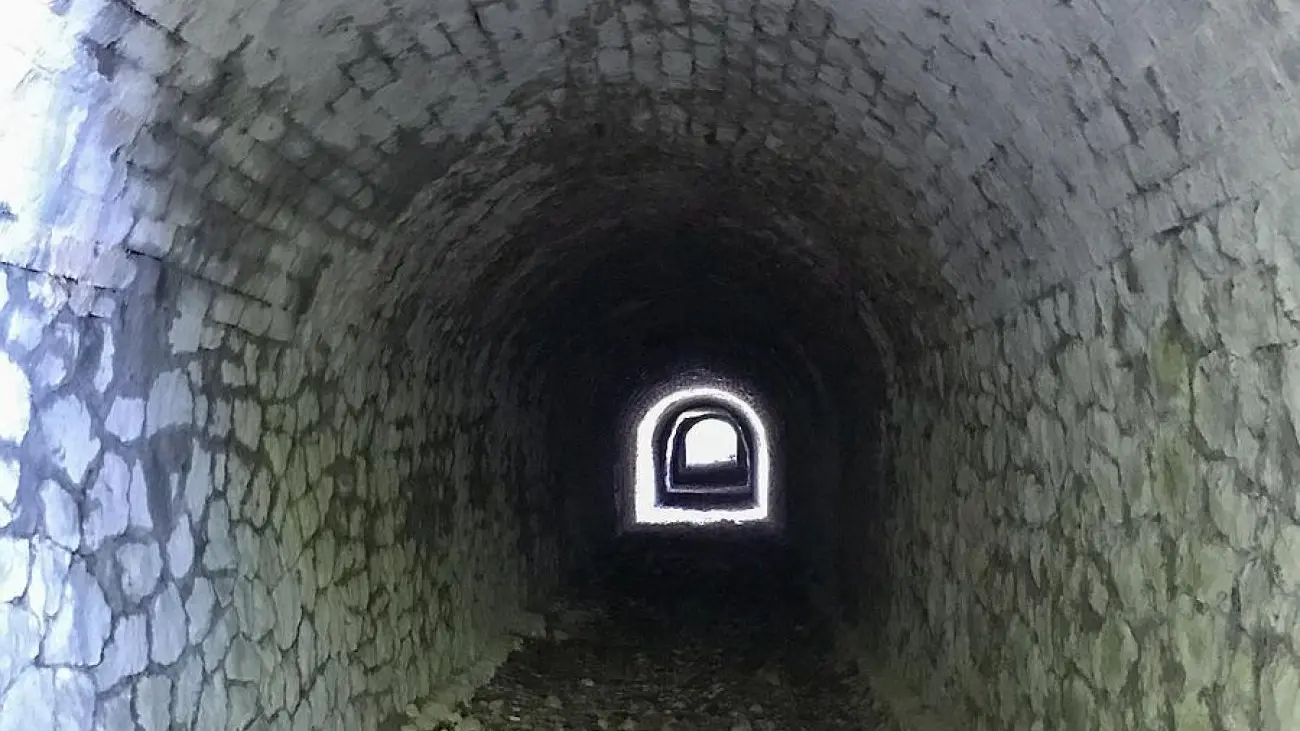
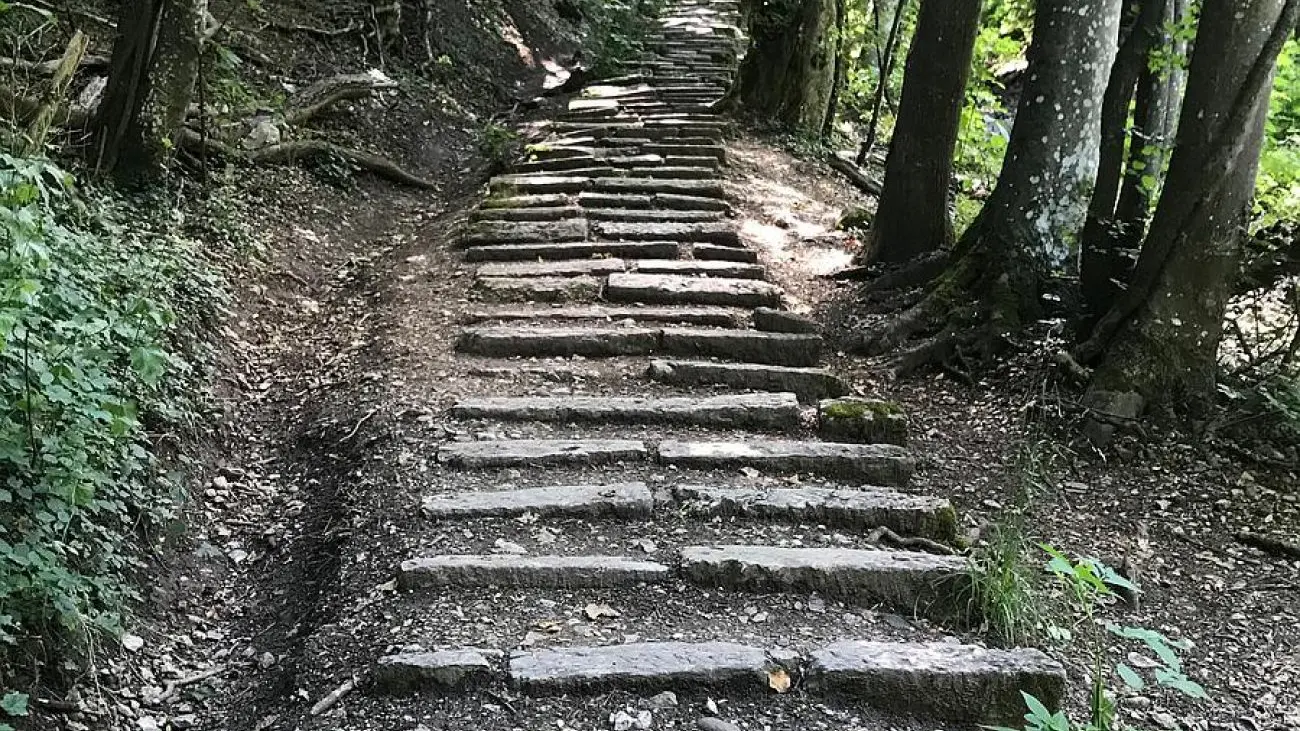
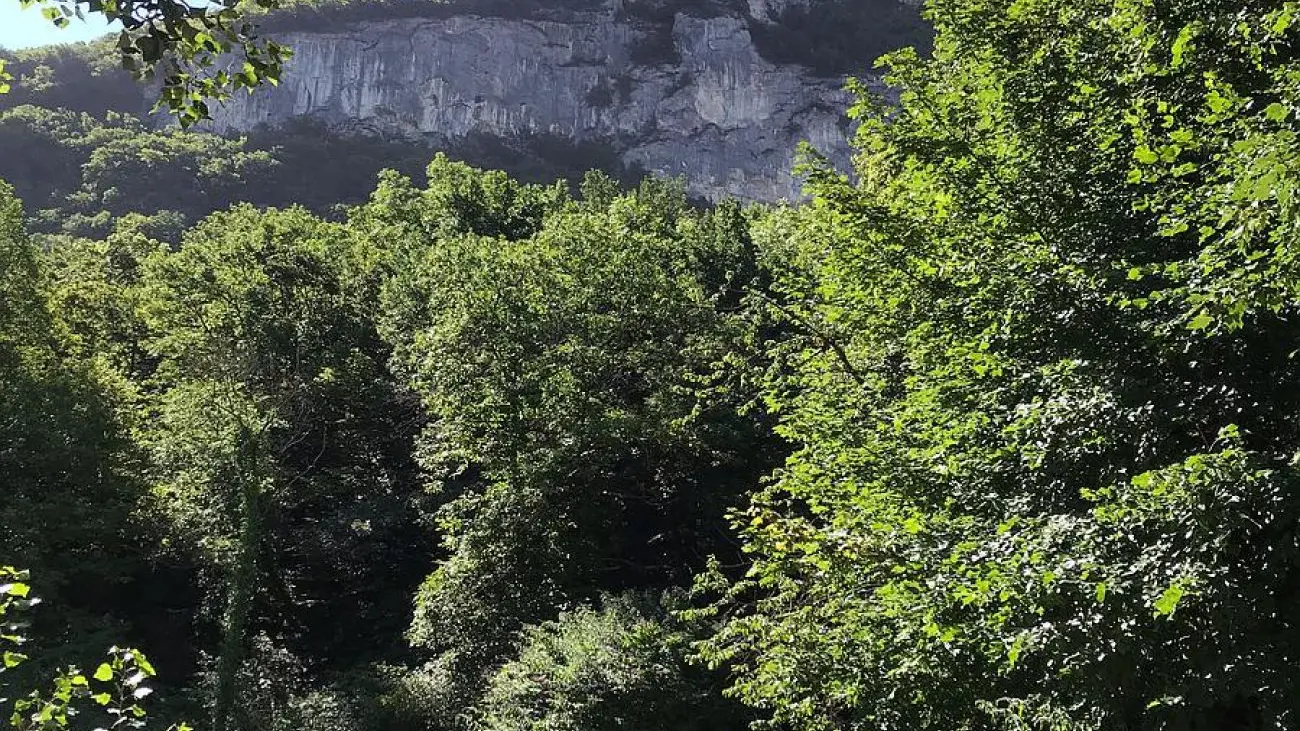
In the cliffs, the path follows a rock-cut staircase dating back to the 14th century. This connected the Salève to Geneva before the arrival of a rack-and-pinion railway at the end of the 19th century, which operated until the mid-1930s. A tunnel remains from this railway infrastructure, which our trail crosses. A long series of eroded steps then leads to Monnetier, a pretty village in the valley between the Petit and Grand Salève.
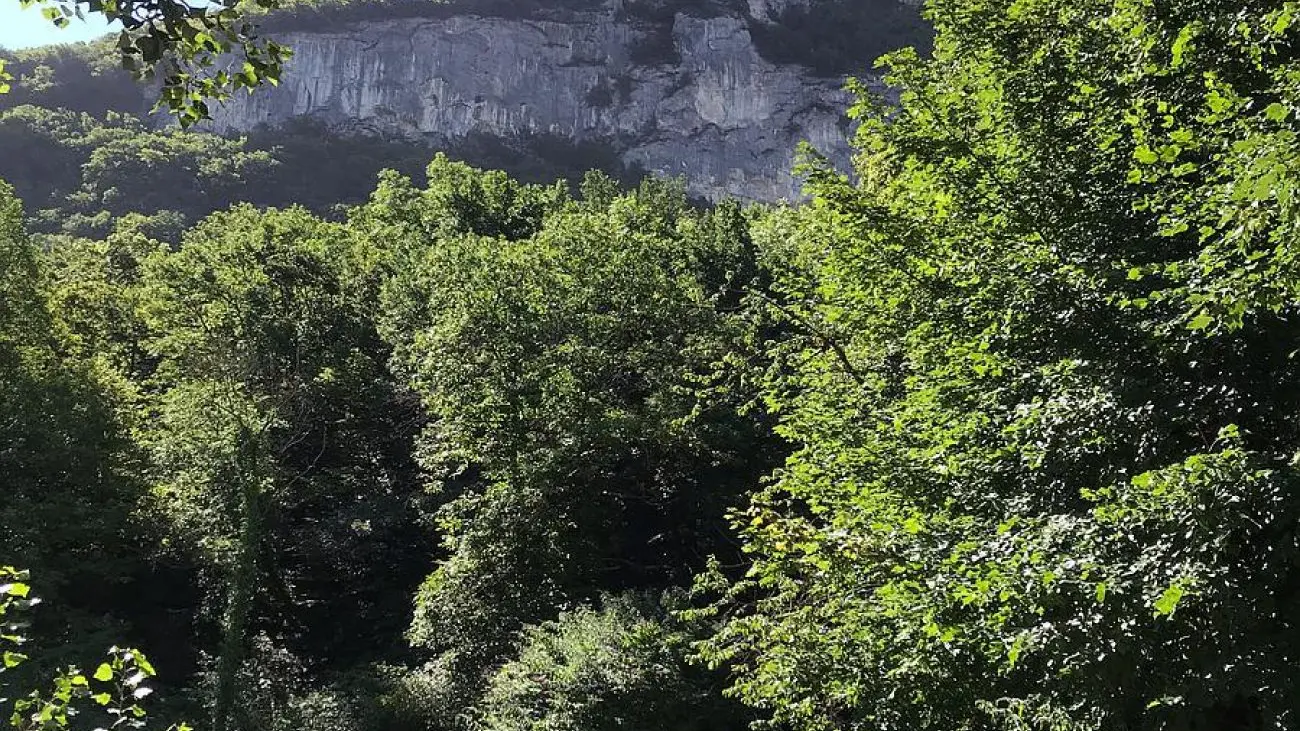
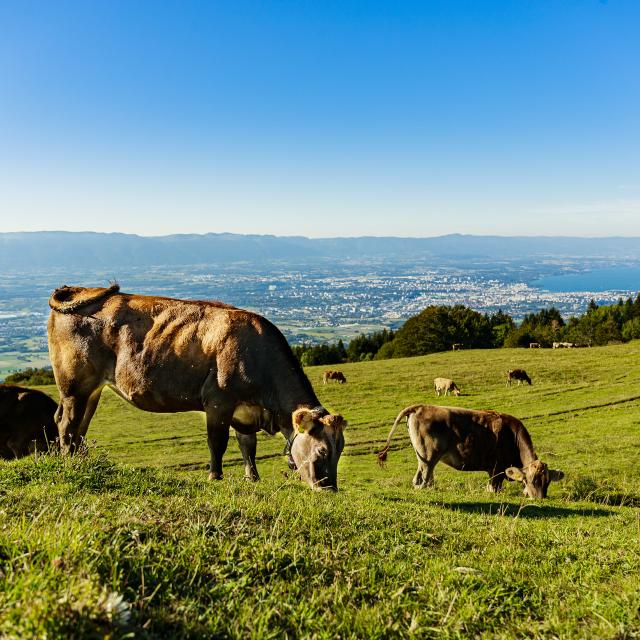
But the route doesn't end there, and there are still a few hundred meters to climb. The path continues to climb through the beech forest, offering fine views. Meadows reminiscent of those in the Jura, the range to which the Salève belongs, finally herald the arrival of the itinerary's destination: the upper station of the Salève cable car.
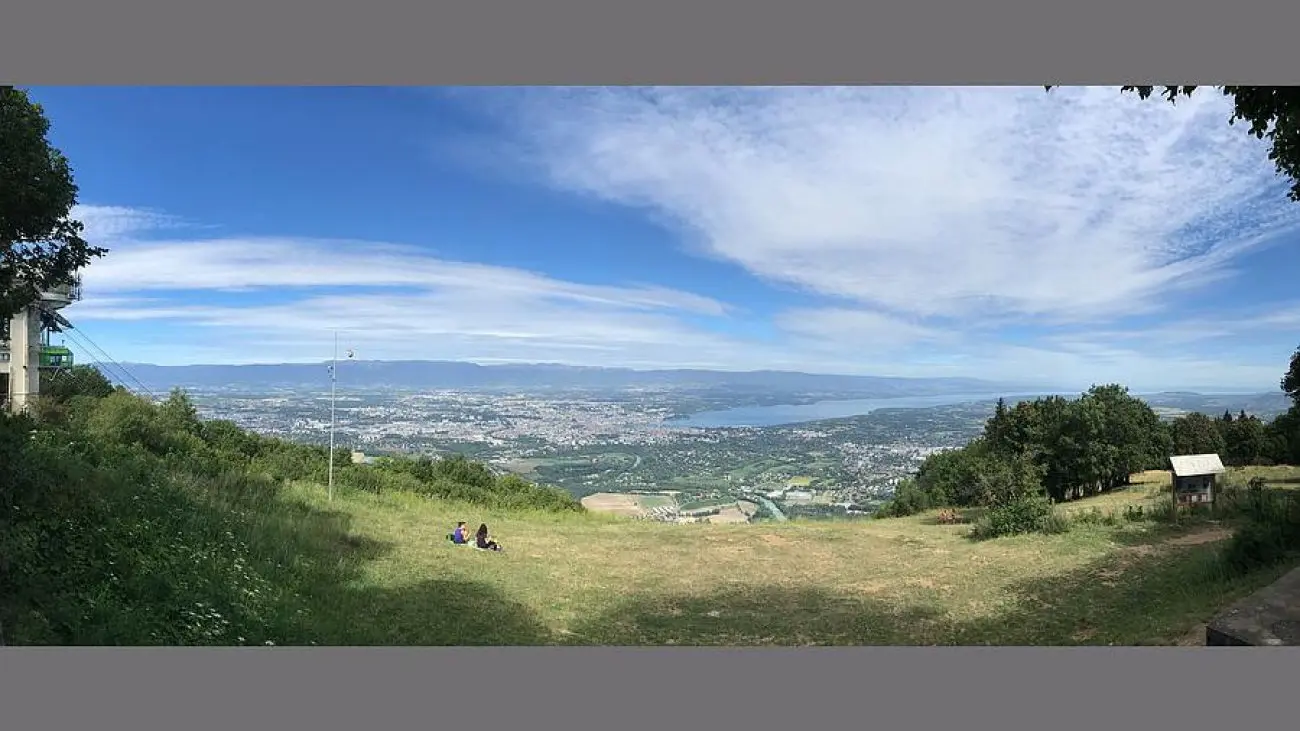
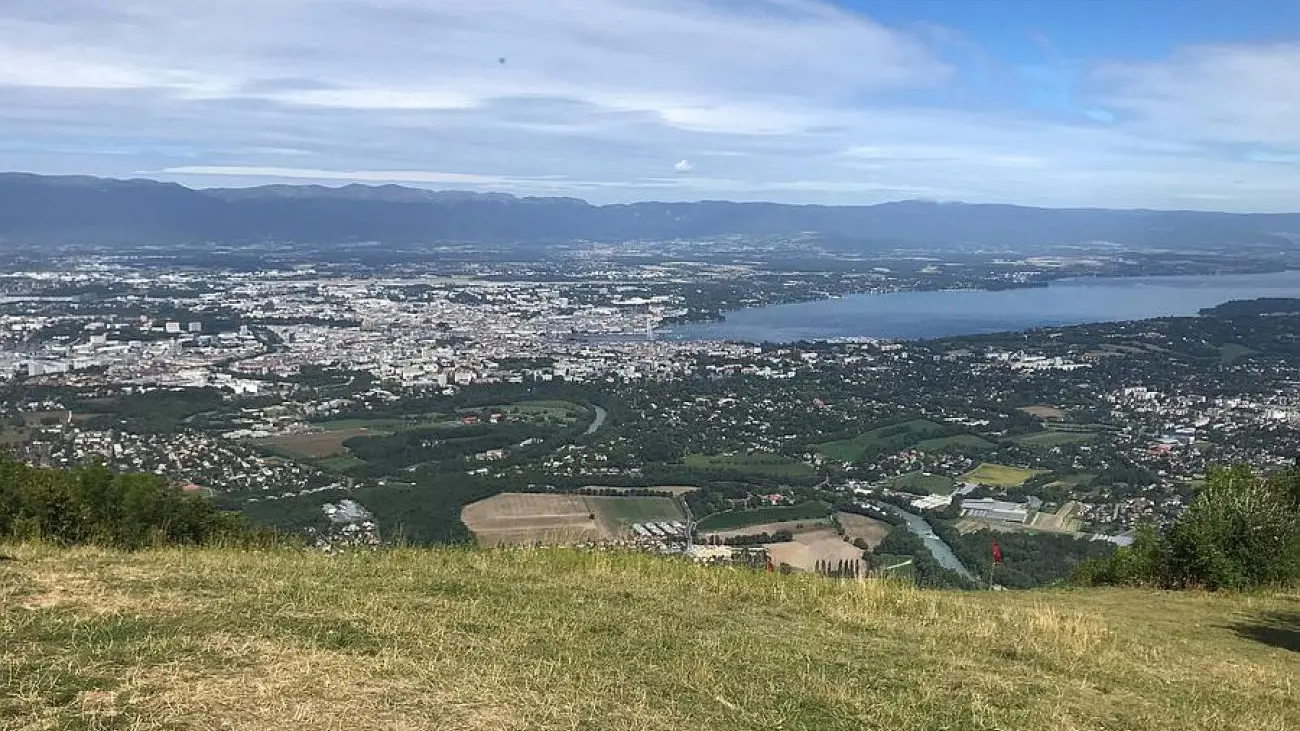
At an altitude of almost 1,100 m, it offers a breathtaking view of the entire Geneva region. From up there, you can see the emblematic features of the Geneva landscape, such as the harbour, the jet d'eau, the Rhône and Arve rivers and the famous Lignon buildings. Not to mention the full length of the Jura mountain range. To return to Veyrier, take the Salève cable car, whose upper station has been listed as a historic monument for its unique architecture.
Read more